
Chinese Medicine :: Insomnia and Sleep Disorders

6 Ways TCM Treats Insomnia and Sleep Disorders

HOW DR. SIEGEL TREATS INSOMNIA

Sleep is the body's nightly report.

Insomnia isn't one condition in Chinese medicine. It's a signal — and depending on whether you can't fall asleep, wake at 3am, sleep lightly, or wake exhausted regardless of hours, the pattern underneath is different. So is the treatment.

Dr. Sarah Siegel (L.Ac) is a Doctor of Traditional Chinese Medicine in Albany, CA. Her practice, With the Seasons, is built around the idea that sleep is the body's most honest report — telling you what's depleted, what's overheated, and what's stuck. Below, she walks through how TCM approaches insomnia: what it looks like through a Chinese medical lens, what acupuncture and herbs actually do, and what patients can expect.

1. Settles the Shen — the spirit-mind that should rest at night
In TCM, the Heart houses the Shen, and the Shen is what should settle into the body for sleep. When it floats — too much heat, not enough blood to anchor it, too much stagnation — sleep fragments. Acupuncture points like Heart 7 (Shen Men, 'Spirit Gate') are used because they directly calm the Shen. Many patients sleep deeply the night of their first treatment.

2. Treats the specific pattern behind your insomnia
Trouble falling asleep is often Liver Qi stagnation or Heart Yin deficiency. Waking at 1–3am is classically Liver. Waking at 3–5am is Lung or grief. Waking exhausted with vivid dreams suggests Heart Blood deficiency. Each pattern gets a different acupuncture protocol and a different herbal formula.

3. Chinese herbal formulas restore sleep architecture, not just sedate
Suan Zao Ren Tang has been used for centuries for sleep disturbed by anxiety and overthinking. Tian Wang Bu Xin Dan nourishes the Heart and Kidney for people who wake with palpitations or run hot at night. Unlike sleep aids, these formulas rebuild the underlying capacity to sleep, rather than forcing unconsciousness.

4. Reduces nighttime cortisol and resets circadian rhythm
Research shows acupuncture lowers nighttime cortisol and influences melatonin regulation. For patients who 'wake wired' or feel a second wind at 10pm, this matters — TCM helps restore the body's downshift into nighttime, not just the moment of sleep onset.

5. Addresses the daytime patterns that are wrecking your nights
Stress that builds all day, meals that overstimulate digestion, the loop of worry that runs underneath everything — all of this shows up at night. TCM treats the 24-hour cycle, not just the hours in bed. Sleep often improves first when the daytime nervous system finally drops a gear.

6. Breaks the exhaustion–insomnia loop without dependency
Many patients arrive on multiple sleep aids, stuck in a loop of being too tired to sleep well. TCM works to restore the body's own rhythm. The goal is sleep that comes naturally, deep enough to wake rested — not a longer list of substances to take at night.

Dr. Siegel is accepting new Telehealth patients throughout California and in her Bay Area clinic.
Acupuncture for insomnia & Sleep disorders
Your body remembers
Sleep isn't something we force. Acupuncture helps calm the nervous system and remove what's getting in the way. Many patients notice deeper, more restorative sleep after their first treatment, with changes building over time.
Chinese Herbs for insomnia & Sleep disorders
We treat
the pattern.
Trouble falling asleep, waking at 3am, light sleep, vivid dreaming — each is a distinct pattern with a distinct treatment in Chinese medicine. Customized herbal formulas work between sessions to nourish Heart Blood, anchor the Shen, and clear the heat or stagnation that's keeping you up.
Chinese medicine for insomnia & Sleep disorders
Beyond just
symtoms.
When the Shen settles, sleep deepens. When digestion calms, the body stops waking to process. TCM treats the full picture — the racing mind, the 3am wake-up, the morning fatigue, the dependence on sleep aids — building your capacity to sleep through the night without working at it.
FAQ

Common Questions About TCM Treatment for Insomnia and Sleep Disorders

What does insomnia look like in Chinese medicine?

TCM doesn't treat 'insomnia' as a single condition. Your practitioner asks when you have trouble sleeping (falling asleep, staying asleep, early waking), what time you wake, whether you dream, whether you feel hot at night, and how you feel in the morning. Common patterns include Liver Qi stagnation (stress-related, can't fall asleep), Heart Yin deficiency (waking hot, restless), Heart Blood deficiency (light sleep, vivid dreams, poor memory), and Spleen Qi deficiency (overthinking, tired but wired). Your treatment is built around your pattern.

How many acupuncture sessions until I sleep better?

Many patients notice improvement after 2–4 sessions, with deeper change building over 6–8 weeks of consistent treatment. Chronic insomnia that has been present for years typically responds best to a sustained course of treatment, followed by maintenance sessions as needed. Acute sleep disruption (recent stress, travel, illness) often responds faster.

Can Chinese herbs help me sleep without the next-day grogginess?

Yes — that's a key advantage. Unlike many pharmaceutical sleep aids, properly prescribed Chinese herbal formulas don't produce sedation or next-day cognitive fog. They work by addressing the underlying imbalance (depleted Blood, unsettled Shen, stagnant Liver Qi) rather than forcing unconsciousness. Most patients describe the sleep as feeling more 'natural' than medication-induced sleep.

Is acupuncture for insomnia scientifically supported?

Yes. Multiple systematic reviews and meta-analyses have found acupuncture effective for insomnia, with research showing effects on melatonin regulation, GABA activity, and the HPA axis. The World Health Organization includes insomnia among conditions for which acupuncture has shown benefit. Classical Chinese medicine has been treating sleep disorders for over two thousand years.

Will I need to stop my sleep medication to try TCM?

No. Do not stop any prescribed medication without consulting your prescribing physician. TCM works well alongside sleep medications, and many patients use it to gradually reduce reliance on medication over time — but this is a process done with your medical team, not abruptly.

 What happens in a first appointment for insomnia?

Your practitioner will ask detailed questions about your stress history, sleep, digestion, emotional patterns, menstrual cycle (if applicable), and overall health. They'll look at your tongue and take your pulse in several positions. All of this informs your Chinese medical diagnosis. Every appointment centers on custom herbal medicine. Telehealth visits include a personalized formula shipped directly to your door. In-person visits include the same herbal consultation, plus a complementary acupuncture treatment while your formula is hand blended in our San Francisco Bay Area herbal pharmacy.. Many patients leave feeling noticeably calmer — and that first shift is often the beginning of a longer process of restoration.

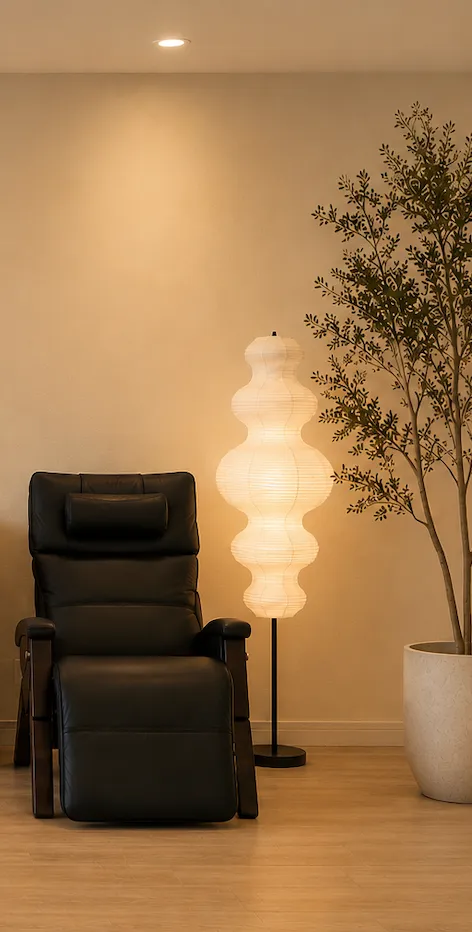
A zero-gravity chair for acupuncture at With The Seasons herbal pharmacy
what's next

Every pattern has a season. And every season, eventually, turns.

Dr. Sarah Siegel, Doctor of Traditional Chinese Medicine, sees patients at With the Seasons in Albany, CA for acupuncture and Chinese herbal medicine — and offers telehealth herbal consultations for insomnia and sleep disorders to patients throughout California.
BOOK A NEW PATIENT APPOINTMENT
LET'S GET STARTED