Chinese Medicine :: DEPRESSION AND MOOD DISORDERS

6 Ways TCM Treats Depression and Mood Disorders

HOW DR. SIEGEL TREATS DEPRESSION AND MOOD DISORDERS

The mind feels it, but the body lives it.

Depression isn't only in the mind in Chinese medicine. It lives in the body — in stuck Qi, depleted Blood, an exhausted Spleen, a Kidney that's run dry. The heaviness, the inability to feel pleasure, the loss of motivation, the slow mornings: each tells you something about which system has lost its ground.

Dr. Sarah Siegel (L.Ac) is a Doctor of Traditional Chinese Medicine in Albany, CA. Her practice, With the Seasons, is built around treating mood symptoms as real physiological patterns — not as moral problems to push through. TCM works best for depression as integrative care, alongside therapy and (when appropriate) medication. Below, she walks through how TCM approaches mood: what it looks like through a Chinese medical lens, what acupuncture and herbal medicine actually do, and what patients can expect.

1. Treats the body underneath the mood
In TCM, depression often involves Liver Qi stagnation that becomes Qi depression, or Spleen and Heart Blood deficiency that leaves the mind unmoored. Treatment addresses these patterns physically — moving stuck Qi, nourishing Blood, supporting the organs that should anchor mood. Patients often notice a return of motion before they notice a return of mood.

2. Modulates the neurochemistry depression disruptsa
Research shows acupuncture influences serotonin, dopamine, GABA, and BDNF — the same systems involved in mood regulation. Studies have found acupuncture helpful as adjunctive treatment for depression, particularly in combination with antidepressant medication.

3. Calms the nervous system that depression keeps in collapse or overdrive
Depression can present as agitated and anxious, or shut-down and heavy — sometimes both in the same week. Acupuncture supports nervous system regulation in either direction, helping the body find a steadier middle.

4. Restores sleep, energy, and appetite — the foundations mood needs
Mood doesn't lift in a body that can't sleep, can't eat, can't move. TCM treats the foundational systems alongside the mood itself, which is often where change first becomes noticeable: better sleep, steadier appetite, more energy — and then, gradually, more capacity for life.

5. Chinese herbal formulas support the work between sessions
Xiao Yao San (for stuck, irritable depression). Gan Mai Da Zao Tang (for grief, weepy mood, restlessness). Gui Pi Tang (for exhausted, anxious low mood with poor sleep). Each formula targets a specific pattern and is customized to your constitution.

6. Works alongside therapy, medication, and other care
TCM is not a replacement for therapy, medication, or mental health care. It's most effective as part of a fuller care picture — supporting the body so the work of therapy and (when appropriate) medication has more to build on. Many patients find that adding TCM accelerates the work they're already doing.

Dr. Siegel is accepting new Telehealth patients throughout California and in her Bay Area clinic.
ACUPUNCTURE FOR MOOD
Your body remembers
Acupuncture supports the neurochemistry, the nervous system, and the body systems mood depends on.  Many patients describe the change first in their body — sleep, energy, less bracing — before they describe it in their mood.
CHINESE HERBS FOR MOOD
We treat
the pattern.
Stuck and irritable, weepy and exhausted, heavy and slow — each presentation of depression is a distinct pattern with a distinct treatment in Chinese medicine. Customized herbal formulas work daily, supporting the underlying terrain.
CHINESE MEDICINE FOR MOOD
Beyond just
symtoms.
When Qi moves, motivation returns. When Blood is nourished, the mind quiets. TCM treats the full picture — the mood, the sleep, the energy, the appetite, the bracing — building physical ground so the rest of your care has more to work with.
FAQ

Common Questions About TCM Treatment for Depression and Mood Disorders  

Is TCM a replacement for therapy or medication?

No. TCM is integrative care — most effective alongside therapy, medication when prescribed, and other mental health support. If you're in crisis or experiencing severe symptoms, please contact your mental health provider or call/text 988 (Suicide and Crisis Lifeline) for immediate support. TCM is a complement to mental health care, not a substitute.

Will I need to stop my antidepressant to try TCM?

No. Do not stop any prescribed medication without consulting your prescribing physician. TCM is designed to work alongside antidepressants and other psychiatric medications. Many patients use TCM as supportive care, and some eventually reduce medication in coordination with their prescriber — but this is a gradual, supervised process.

What does depression look like in Chinese medicine?

TCM doesn't have a single diagnosis for 'depression.' Your practitioner looks at the quality of your mood (stuck and irritable vs. heavy and slow vs. weepy and exhausted), your sleep, energy, appetite, digestion, and how stress moves through you. Common patterns include Liver Qi stagnation, Spleen Qi deficiency, Heart Blood deficiency, and Kidney Yang deficiency. Treatment is built around your pattern.

Is acupuncture for depression scientifically supported?

Yes, with appropriate framing. Multiple meta-analyses have found acupuncture effective as adjunctive treatment for depression — particularly combined with standard care. It's most studied for mild to moderate depression. For severe depression or suicidal ideation, please prioritize working with mental health professionals; TCM may have a supportive role but is not a primary treatment.

Can Chinese herbs interact with my antidepressant?

Some can. Full disclosure of all medications is essential. A licensed practitioner is trained to consider serotonergic interactions and other concerns, and will design a formula that's safe alongside your current regimen, or coordinate with your prescriber as appropriate.

What happens in a first appointment for mood?

Your practitioner will ask detailed questions about your mood, sleep, energy, appetite, history, current care (therapy, medication), and overall health. They'll look at your tongue and take your pulse. Every appointment centers on custom herbal medicine. Telehealth visits include a personalized formula shipped directly to your door. In-person visits include the same herbal consultation, plus a complementary acupuncture treatment while your formula is hand blended in our San Francisco Bay Area herbal pharmacy. Many patients leave feeling noticeably calmer — and that first shift, while not a cure, is often the beginning of a longer process.

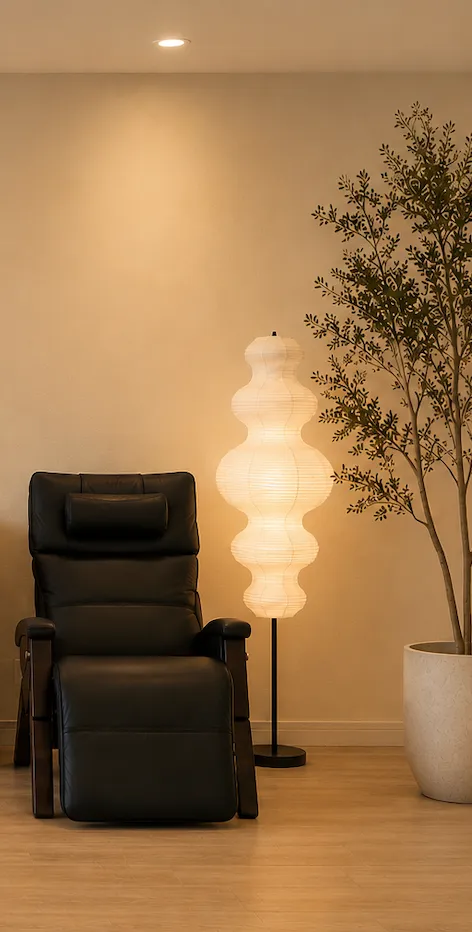
A zero-gravity chair for acupuncture at With The Seasons herbal pharmacy
what's next

Every pattern has a season. And every season, eventually, turns.

Dr. Sarah Siegel, Doctor of Traditional Chinese Medicine, sees patients at With the Seasons in Albany, CA for acupuncture and Chinese herbal medicine — and offers telehealth herbal consultations for mood support to patients throughout California. TCM is integrative care and works best alongside your mental health team.
BOOK A NEW PATIENT APPOINTMENT
LET'S GET STARTED