
Chinese Medicine :: Anxiety and stress

6 Ways TCM Treats Anxiety and Stress

How Dr. Siegel Treats anxiety

Anxiety is nothing more than a signal

Anxiety isn't a diagnosis in Chinese medicine. It's a signal — and depending on whether yours shows up as racing thoughts at 2am, a jaw you can't unclench, or worry that loops without resolution, the pattern underneath is different. So is the treatment.

Dr. Sarah Siegel (L.Ac) is a Doctor of Traditional Chinese Medicine in Albany, CA. Her practice, With the Seasons, is built around the idea that the body's disruptions make sense when you know how to read them — and that real relief comes from treating the root, not managing the noise. Below, she walks through how TCM approaches anxiety: what it looks like through a Chinese medical lens, what acupuncture and herbal medicine actually do, and what patients can expect.

1. Regulates the nervous system — without sedation
Acupuncture has been shown to activate the parasympathetic nervous system — your body's "rest and digest" response — reducing cortisol levels and calming the physiological stress response. Patients often notice a deep, drug-free relaxation during and after treatment that builds over time.

2. Addresses the root pattern, not just the symptom
In TCM, anxiety isn't one condition — it's a sign of underlying imbalance. Whether your anxiety shows up as racing thoughts (Heart-Kidney disharmony), constant worry (Spleen deficiency), or irritability and tension (Liver Qi stagnation), treatment is tailored to your specific pattern. This is why two people with "anxiety" may receive completely different treatments.

3. Chinese herbal medicine supports you between sessions
Herbal formulas work around the clock, nourishing the systems that acupuncture opens up. Classical formulas like Gui Pi Tang (for anxiety with exhaustion and digestive issues) and Suan Zao Ren Tang (for anxiety-driven insomnia) have centuries of clinical use. Formulas are customized to your constitution and adjusted as you shift.

4. Improves sleep disrupted by stress
Anxiety and poor sleep feed each other. TCM treats both simultaneously — because in Chinese medicine, the Heart houses the Shen (spirit/mind), and when it's unsettled, sleep suffers. Acupuncture points and herbs that calm the Shen help quiet a racing mind at night, breaking the exhaustion-anxiety cycle.

5. Reduces the physical symptoms of chronic stress
Stress doesn't stay in your head. TCM treats the full picture: tight shoulders and jaw, digestive upset, headaches, heart palpitations, and fatigue. By moving stagnant Qi and nourishing depleted organ systems, treatment addresses the body-wide impact of chronic stress — not just how you're feeling emotionally.

6. Builds long-term resilience, not dependency
Unlike medication that manages symptoms as long as you take it, TCM works to restore your body's own capacity to regulate. The goal is a nervous system that returns to baseline more easily — so that when life gets hard (and it will), you have more to draw from.

Dr. Siegel is accepting new Telehealth patients throughout California and in her Bay Area clinic.
Acupuncture for Anxiety & Stress
Your body knows calm
Acupuncture directly activates your parasympathetic nervous system — the biological off-switch for stress. Without sedation or side effects. New patients often leave their first treatment feeling the kind of quiet they forgot was possible.
Chinese Herbs for Anxiety & Stress
We treat
the pattern.
In Chinese medicine, anxiety isn't one thing. Racing thoughts, constant worry, irritability and tension — each is a distinct pattern with a distinct treatment. Chinese herbal formulas, customized to your constitution, work between sessions to nourish what's depleted and move what's stuck.
Chinese medicine for Anxiety & Stress
Beyond just
symtoms.
When the Heart settles, sleep follows. When Qi moves freely, the body stops bracing. TCM treats the full picture — the insomnia, the tight jaw, the digestive upset, the fatigue — building your capacity to return to baseline, not just survive the next hard thing.
FAQ

Common Questions About TCM Treatment for Anxiety & Stress

What does anxiety look like in Chinese medicine?

TCM doesn't have a single diagnosis called 'anxiety.' Instead, your practitioner looks at the full picture — your sleep, digestion, menstrual cycle, emotional patterns, tongue, and pulse — to identify the underlying imbalance. Common patterns associated with anxiety include Liver Qi stagnation (characterized by irritability, tension, and sighing), Heart Blood deficiency (characterized by restlessness, poor memory, and insomnia), and Spleen Qi deficiency (characterized by excessive worry and fatigue). Your treatment plan is built around your pattern, not a label.

How many acupuncture sessions does it take to feel a difference?

Most patients notice a shift in their baseline stress levels within 4–6 sessions, though some feel immediate relief after the first treatment. Anxiety that has built up over months or years typically responds best to a consistent course of treatment — usually weekly sessions for 6–8 weeks, followed by maintenance as needed. Acute stress can respond faster. You and your practitioner will assess your progress together.

Can I take Chinese herbs alongside my current medications?

This is an important question and one your practitioner will ask about in your intake. Many patients use Chinese herbal medicine alongside Western medications safely, but herb-drug interactions do exist and must be considered. Always disclose all medications and supplements. A licensed practitioner of Chinese medicine is trained to navigate these considerations and will either modify formulas or refer you to your prescribing doctor as appropriate.

Is acupuncture for anxiety scientifically supported?

Yes. A growing body of research supports acupuncture's effectiveness for anxiety and stress-related conditions. Studies have demonstrated that acupuncture modulates the hypothalamic-pituitary-adrenal (HPA) axis, reduces cortisol, and influences neurotransmitters including serotonin and GABA. The World Health Organization recognizes anxiety disorders among the conditions for which acupuncture has shown benefit. TCM also has thousands of years of empirical clinical evidence — which is a different kind of data, but not a lesser one.

Do I need to stop my current anxiety medication to try TCM?

No. Do not stop any prescribed medication without consulting your prescribing physician. TCM works well as an integrative approach — alongside therapy, medication, or lifestyle changes. Many patients use TCM to reduce their reliance on medication over time, but this is a gradual process done in coordination with their medical team, not a reason to stop suddenly.

What happens in a first appointment for anxiety?

Your practitioner will ask detailed questions about your stress history, sleep, digestion, emotional patterns, menstrual cycle (if applicable), and overall health. They'll look at your tongue and take your pulse in several positions. All of this informs your Chinese medical diagnosis. Every appointment centers on custom herbal medicine. Telehealth visits include a personalized formula shipped directly to your door. In-person visits include the same herbal consultation, plus a complementary acupuncture treatment while your formula is hand blended in our San Francisco Bay Area herbal pharmacy.. Many patients leave feeling noticeably calmer — and that first shift is often the beginning of a longer process of restoration.

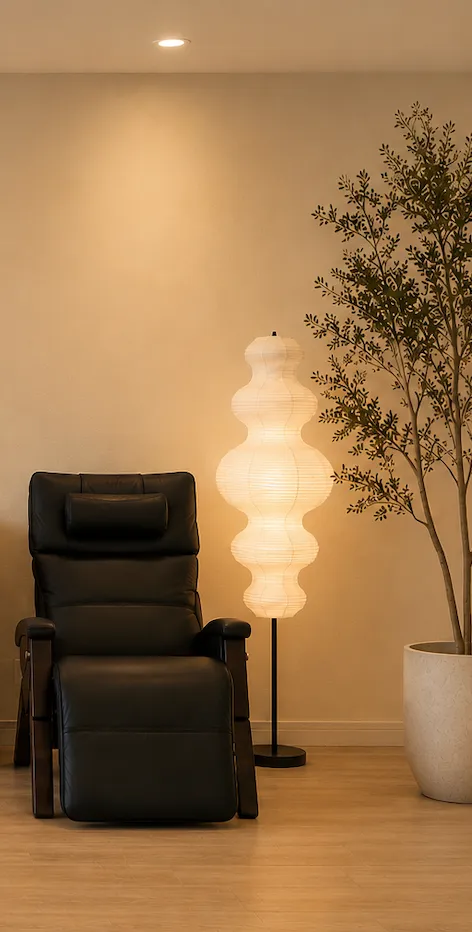
A zero-gravity chair for acupuncture at With The Seasons herbal pharmacy
what's next

Every pattern has a season. And every season, eventually, turns.

Dr. Sarah Siegel, Doctor of Traditional Chinese Medicine, sees patients at With the Seasons in Albany, CA for acupuncture and Chinese herbal medicine — and offers telehealth herbal consultations for anxiety and stress to patients throughout California.
BOOK A NEW PATIENT APPOINTMENT
LET'S GET STARTED